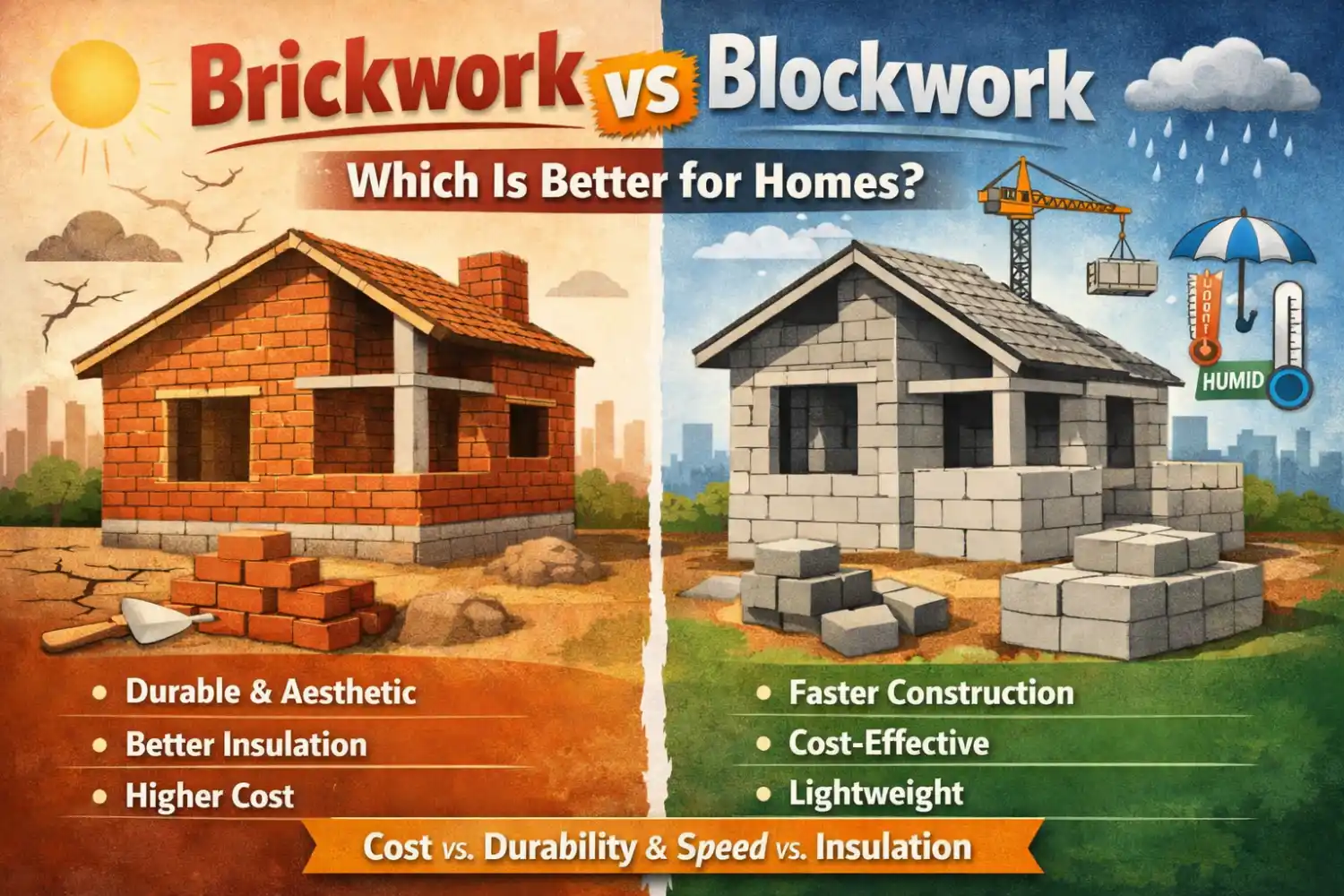
Brickwork or blockwork is a common decision faced during home construction, and it directly affects cost, strength, and long-term comfort. Brick vs block construction is not just about looks; it impacts wall thickness, insulation, and how fast the structure comes up. Many homeowners also worry about maintenance and how the walls perform in Indian weather conditions.
The best wall material for homes depends on usage and budget. Brickwork offers better durability and finish, while blockwork speeds up masonry construction and reduces overall cost. This guide breaks down which option suits different home needs based on real building practices, not theory.
Brickwork vs Blockwork at a Glance (60-Second Verdict)
Brickwork vs Blockwork is one of the most common choices faced during home construction, and the difference shows up quickly on site. This quick view helps decide without reading long explanations. It reflects what usually works better in Indian weather, budgets, and building timelines.
If time is limited, this table answers fast. It compares both options based on actual site performance, not theory. Builders often use this view to guide early planning.
| Feature | Brickwork | Blockwork |
|---|---|---|
| Durability | Very High | High |
| Construction Speed | Slower | Faster |
| Initial Cost | Higher | Lower |
| Finish Required | No | Yes (Plaster/Render) |
| Thermal Performance | High Thermal Mass | Needs Insulation |
| Visual Appeal | Premium, Finished | Functional, Industrial |
Brickwork suits homes where long life and a finished look matter most. Blockwork fits projects where speed and cost control are the priority. The better option depends on how the home will be used and finished later.
Understanding Brickwork – Strength, Appearance & Longevity
Brickwork construction brings together strength and visual appeal in a way few building methods can match. It works as a solid structure while also giving homes a clean, finished look. Because of this dual role, brickwork is often seen as a long-term investment rather than a short-term choice. When planned well, it supports the building and improves how it looks for decades.
Structural Performance of Brickwork
Brick masonry is known for its high compressive strength, which allows it to carry heavy loads safely. In low-rise buildings, brick walls for homes often act as load-bearing elements, spreading weight evenly through proper mortar bonding. This balanced load distribution reduces cracks and long-term movement. Brickwork construction also offers strong resistance to fire, heat, and harsh weather.
Aesthetic & Property Value Impact
- Facing bricks add a natural finish that many buyers prefer, which can raise resale value.
- Exposed brick gives a timeless look that does not go out of style.
- No need for regular painting, saving money over time.
- Builders often suggest face brick because it stays clean and neat for years.
Limitations of Brickwork
- Construction speed is slower compared to block systems.
- Skilled labour can increase the overall cost.
- Laying bricks needs dry, stable weather for the best results.
Understanding Blockwork – Speed, Cost & Structural Efficiency
Blockwork construction is the preferred choice for modern engineers because it balances speed, strength, and cost effectively. Using concrete blocks or AAC blocks, walls for homes can be built faster than traditional brickwork while maintaining durability. These blocks offer uniform size and quality, making them ideal for precise, consistent construction. Their lightweight nature also reduces the overall load on foundations, improving structural efficiency.
Structural Strength & Load Capacity
7N–10N concrete blocks are commonly used in multi-storey homes due to their high load-bearing capacity. They comply with modern building regulations, ensuring safety and longevity. Block walls for homes resist weathering and provide stable support for upper floors. Their popularity in contemporary construction comes from the combination of strength, fire resistance, and ease of handling.
Speed of Construction & Cost Efficiency
- Larger block units mean fewer joints, reducing construction time.
- Less mortar is needed, lowering material costs.
- Walls can be built faster, saving significant man-hours on-site.
- Overall, blockwork construction can reduce labour by up to 20% compared to traditional brickwork.
Limitations of Blockwork
- Requires plaster or render for a finished look.
- Can crack if movement joints are ignored.
- Exposed blocks give an industrial look, which may not suit all designs.
Structural Engineering Perspective – What Builders Look At
Builders don’t select walls based on appearance alone. Structural safety, material strength, and compliance with building regulations play a bigger role in decision-making. Understanding how walls handle weight and stress is key before finalising any design. Every choice affects the long-term stability of the home.
Compressive Strength & Load Transfer
Load-bearing walls need to safely carry the weight above them. Standard clay bricks often reach 20 to 50 N/mm², whereas Aerated Autoclaved Concrete (AAC) blocks typically range from 3 to 4.5 N/mm². This makes bricks superior for handling concentrated loads, while blocks are optimised for distributed loads in framed structures.
For small homes, brick walls handle standard loads well, but multi-story buildings often require block walls to ensure safety. Using structural walls that match load demands prevents future sagging or failure.
Movement Joints & Crack Prevention
Blocks are rigid, so movement joints are needed every six meters to prevent cracks. Bricks, being slightly more flexible, allow wider spacing between joints. Ignoring these joints causes visible cracks that compromise both aesthetics and structural integrity. Proper joint planning is essential for durable walls.
Weather & Soil Movement Considerations
Bricks adapt better to soil shifts and minor settling, reducing stress cracks. Blocks are strong but less forgiving, making them ideal for stable foundations. Choosing materials with the right balance of flexibility and rigidity ensures walls withstand both weather and soil changes.
Thermal & Energy Performance in Modern Homes (2026 Standards)
Choosing the right materials directly affects comfort and energy bills. High thermal mass materials like solid bricks absorb heat during the day and release it slowly at night, stabilising indoor temperatures. Energy-efficient walls with proper insulation reduce the need for constant heating or cooling, lowering monthly costs.
Thermal Mass vs Insulation
Solid bricks excel at storing and gradually releasing heat, making them ideal for climates with large day-night temperature swings. Construction blocks have limited heat storage and rely more on insulation to maintain indoor comfort. Modern energy audits focus on U-Value, where a lower number indicates better thermal performance. A solid brick wall typically has a U-Value of ≈2.0 W/m²K, while adding an insulated block inner leaf can reduce it to ≈0.3 W/m²K, meeting current green building standards.
Cavity Wall Systems
A cavity wall with a brick outer layer and an insulated block inner layer combines thermal mass and insulation efficiently. The brick absorbs and releases heat, while the insulated block minimises heat loss. This setup balances comfort, energy efficiency, and durability, reducing reliance on heating and cooling systems.
Hidden Costs & Long-Term Maintenance Reality
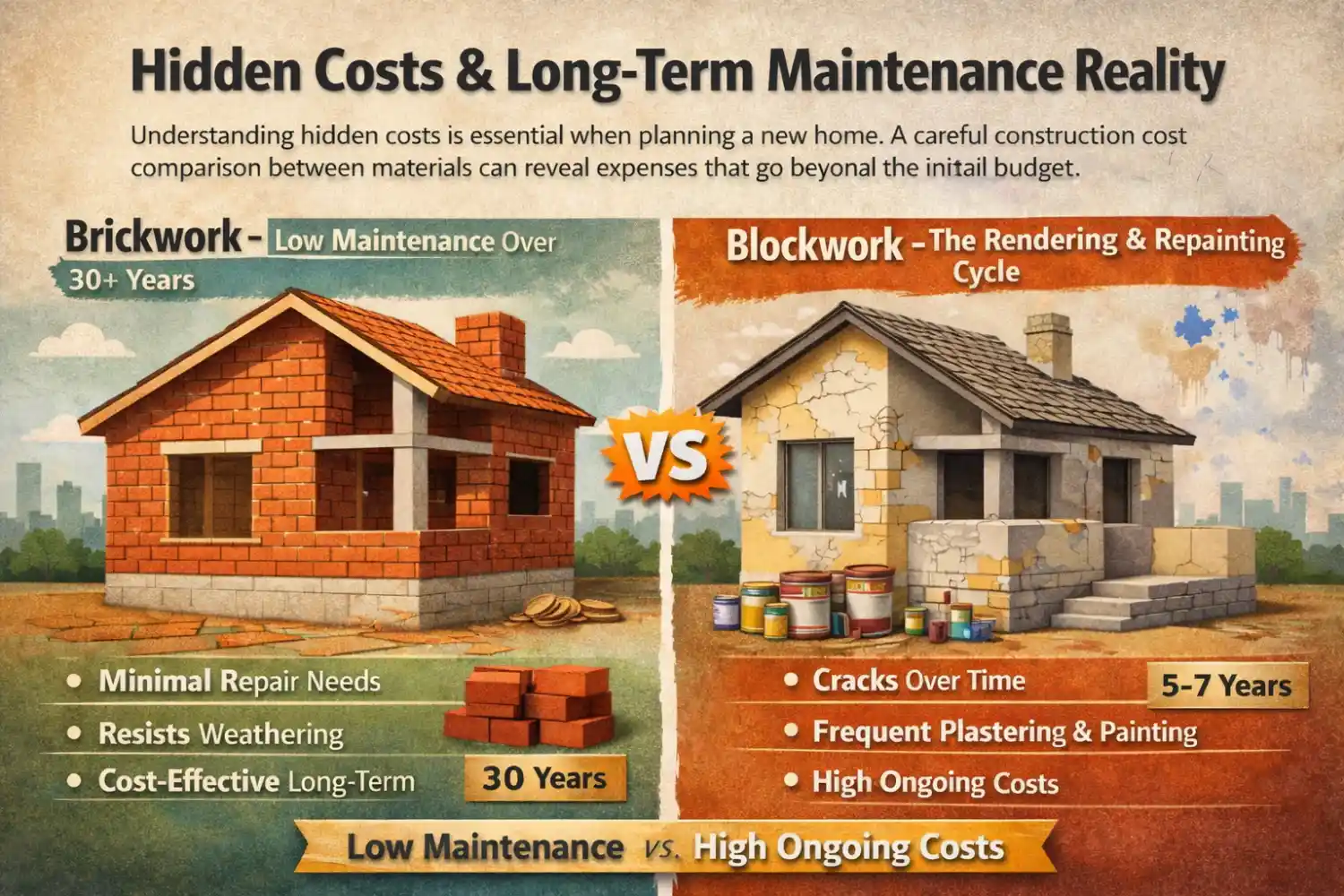
Understanding hidden costs is essential when planning a new home. A careful construction cost comparison between materials can reveal expenses that go beyond the initial budget. Brick vs block cost is not just about the upfront price—long-term home maintenance costs play a big role in overall spending. Over time, small repairs and upkeep can add up, making one option more economical than it seems at first glance.
Brickwork – Low Maintenance Over 30+ Years
Brick walls require almost no repainting, and their natural durability keeps repair needs minimal. They resist weathering and do not crack easily, reducing long-term maintenance. Over decades, brickwork often proves cost-effective because it stays strong and attractive without repeated investments in repairs or finishes.
Blockwork – The Rendering & Repainting Cycle
Block walls need plastering and regular painting to maintain appearance. Plaster can crack over time, leading to frequent touch-ups. Typically, painting every 5–7 years is necessary, increasing both labour and material costs compared to brickwork.
Noise & Vibration Considerations During Finishing
Your choice of wall material affects more than strength—it impacts finishing noise and vibration. When planning block wall chasing or brick wall finishing, understanding how different walls respond to hammering and chiselling can save time and prevent damage. Blocks absorb impact better, reducing noise and limiting wall vibration during the installation of wires or pipes.
Easier Chasing in Blocks
Channels for electrical and plumbing lines in blocks require less effort, making the finishing process faster and cleaner.
Brickwork Vibration
Hard bricks tend to transmit hammering force, which can create micro-cracks if over-chiselled. Extra care is needed to avoid damaging the wall during home renovation projects.
Pro Tip
Using AAC or lightweight blocks in high-rise apartments minimises structural noise and wall vibration, making installations smoother and less disruptive.
Regional & Environmental Considerations
Geography plays a crucial role in choosing the right building materials. Coastal construction materials need to withstand salt, moisture, and strong winds, while inland regions may focus more on temperature extremes. Humidity-resistant walls prevent dampness, mould, and structural damage, making them essential in high-moisture areas. Understanding the climate impact on masonry ensures buildings last longer and require less maintenance.
Coastal & High-Humidity Areas
In coastal regions, salt-laden air can gradually erode bricks and concrete if the wrong materials are used. Using coated or treated bricks helps reduce corrosion and maintain structural strength. Moisture control in blockwork is essential, including proper drainage and water-resistant coatings. These measures keep walls dry, preventing mould growth and reducing repair costs over time.
Hot vs Cold Climate Performance
Materials with high thermal mass, like dense bricks and blocks, help regulate indoor temperatures in hot climates by absorbing heat during the day and releasing it at night. In cold regions, insulation strategies such as cavity walls and thermal barriers reduce heat loss. Selecting masonry suited to the local temperature range improves comfort and lowers energy costs.
Brickwork or Blockwork – Which Should You Choose?
Choosing the best wall material for homes can be tricky, but knowing the strengths of brick and block can simplify the decision. A brick or block house performs differently in cost, insulation, and appearance. This construction decision guide breaks down when each option makes sense.
Choose Brickwork If…
Bricks give walls a timeless look, making them perfect when visual appeal matters. They are highly durable and require less maintenance, offering long-term value. Brick walls also provide better natural insulation, keeping homes cooler in summer and warmer in winter.
Choose Blockwork If…
Blocks are larger, which speeds up construction and lowers labour costs, making them ideal for tight budgets. They are easier to cover with plaster or paint, so a smooth finish can be achieved quickly. Blockwork is a smart choice when rendering is planned rather than leaving walls exposed.
The Smart Compromise
A cavity wall using brick outside and block inside combines the strength and look of bricks with the speed and economy of blocks. This hybrid approach balances cost, insulation, and aesthetics effectively.
Hidden Maintenance Tricks for Long-Lasting Walls
Even high-quality masonry benefits from a few maintenance tricks. Proper brickwork maintenance can prevent small issues from turning into costly repairs. Simple steps like inspecting joints and checking wall surfaces regularly keep structures strong and durable.
Sealing Joints
Sealing joints prevents water from seeping into bricks or blocks, which can cause cracks and mould. Use suitable sealants and reapply them every few years for consistent protection.
Inspect AAC Curing
Ensure AAC blocks are fully cured before applying plaster. Improper curing can lead to cracks and reduce wall durability over time.
Damp-Proof Course Check
Regularly check the damp-proof course in older walls. This simple step stops rising damp and preserves both appearance and strength.
These small checks save thousands in repairs over the years.
Final Verdict – Builder’s Recommendation
When choosing between bricks and blocks, the right decision depends on the specific needs of the project. The brick vs block verdict isn’t about which is universally better, but which performs best for a particular use. Each material has strengths in cost, durability, insulation, and construction speed that should guide the choice.
Decision Matrix for Best Masonry Choice:
- Bricks: Ideal for aesthetic walls, high durability, and thermal comfort.
- Blocks: Best for faster construction, larger structures, and cost efficiency.
- Combination Use: Bricks for visible or decorative walls, blocks for structural cores.
The smartest homes use both materials strategically.
FAQs
1. Which is stronger: brickwork or blockwork?
Brickwork provides higher compressive strength, making it ideal for long-lasting structures. Modern concrete or AAC blocks still meet residential standards and allow faster wall construction.
2. Is blockwork more cost-effective than brickwork?
Blockwork usually saves on labour and mortar, making it a budget-friendly option. However, finishing costs like plastering can reduce the overall savings in some projects.
3. Do bricks or blocks provide better insulation?
Bricks offer natural thermal mass, keeping homes cooler in summer. Blocks often need extra insulation layers to achieve the same energy efficiency indoors.
4. Which wall type is easier for electrical and plumbing installations?
Blockwork walls, particularly AAC blocks, are easier to chase for wiring and pipes. This reduces construction time, noise, and vibration compared to brick walls.
5. Are there maintenance differences between bricks and blocks?
Bricks require little maintenance but can show efflorescence in humid climates. Block walls usually need plastering and occasional checks for cracks or water seepage.
Planning Your Home Construction?
Get expert guidance on material selection, structural planning, and cost estimation for your project. Our civil works team specializes in helping homeowners make informed decisions that balance budget, durability, and design.
Visit Our Home Page to explore complete residential construction and interior design solutions.